In this guide:
Key Takeaways – Buy Gold
- Historical Context: Gold crashes only happen when “Real Interest Rates” become positive.
- 2025 Outperformance: Gold surged 65% in 2025, dwarfing the S&P 500’s 16% gain. Gold also outperformed Bitcoin!
- Inflation Hedge: With UK and US inflation likely remaining sticky in 2026, gold continues to serve as a primary tool for preserving purchasing power against weakening currencies
- Debt Trap: the US debt-to-GDP is over 120%, making high interest rates (which would work against gold) almost impossible today.
- Gold outlook: Despite potential volatility, the long-term outlook remains bullish due to de-dollarisation and loose fiscal policy.
- What to Buy: Buying Physical Bullion or a Gold Exchange Traded Commodity (ETC) being the preferred option for many investors.
Buy Gold – You’ve likely noticed the market is moving faster than ever. As we head into 2026, many investors are asking if the current surge is a sustainable breakout or a repeat of the 1980 crash. Understanding the relationship between inflation, interest rates, and currency confidence is the key to timing your entry into the precious metals market safely and tax-efficiently.
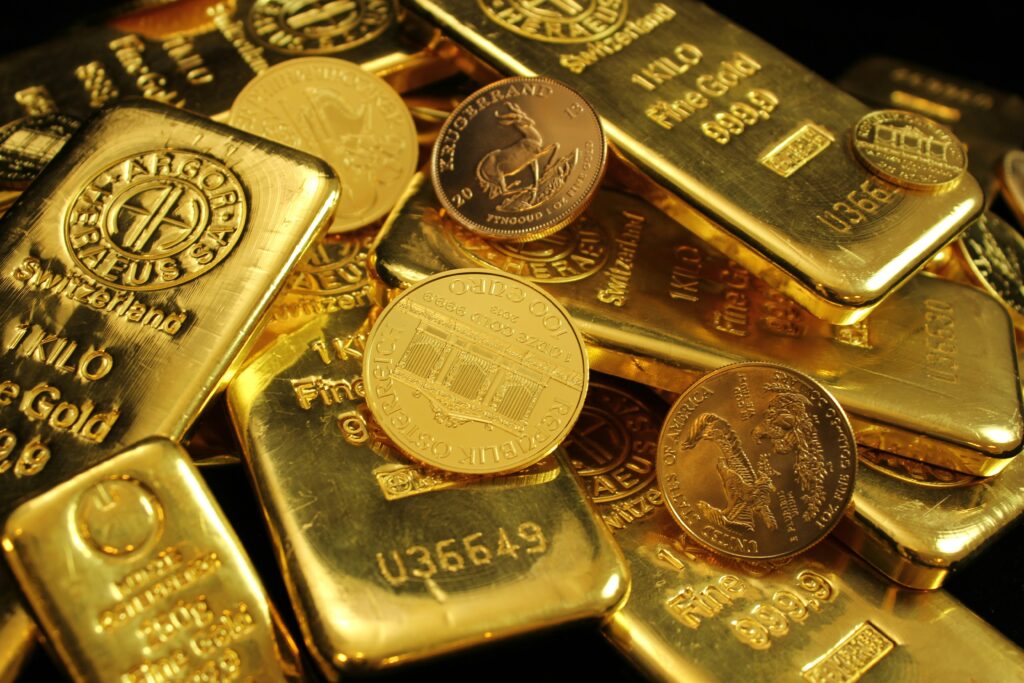
The 2026 Surge: Is a Crash Coming?
Gold has been hitting record highs, leaving many investors wondering if they’ve missed the boat. In 2025 alone, gold skyrocketed by 65%, significantly outperforming the S&P 500, which managed a 16% gain. Silver managed to rally 144% during this same period as it was chased by investors looking for higher industrial growth.
When an asset moves this fast, the “crash” word starts being whispered. To understand if a crash is coming, we have to look back at the two most prominent gold price crashes in recent history – first in 1980 and then during 2011-2015.
Lessons from the 1980 Crash (The Volcker Shock)
In the late 1970s, the situation felt very similar to today: an oil crisis, rampant inflation, and falling confidence in the economy. Gold surged as investors lost faith in the US Dollar. Then, gold crashed by 65%.
Why did it crash? It wasn’t because gold was “too expensive.” It was because of one man: Paul Volcker.

Paul Volcker: the Federal Reserve Chairman who famously tamed inflation in the 1980s by raising interest rates to 20% – and broke the gold price doing so.
In 1980, the Federal Reserve intervened by ramping interest rates up to 20%. Imagine paying a 20%+ interest rate on your mortgage today!
The 2011 to 2015 “Grind Down”
After peaking at $1,920/oz in September 2011—fueled by post-financial crisis Quantitative Easing (QE)—the market reversed. Inflation remained stubbornly low. As real interest rates moved higher and the US Dollar strengthened, gold entered a painful bear market, eventually grinding down 45% from its peak by 2015. Gold lost its role as insurance as markets recovered.
Real Interest Rates: The Gold Killer
Raising rates hurt gold because Volcker ensured the interest rate was higher than the rate of inflation. Logic: Why hold gold (which pays no interest) when you can hold cash or Treasuries and get a “guaranteed real rate of return”?
- The Result: Capital flowed back to the Dollar, inflation expectations collapsed, and gold lost its role as “monetary insurance.”
Why 2026 is the Opposite of 1980 and 2011
Many bears argue that high rates today will kill gold. They are missing one crucial metric: Real Interest Rates.
Currently, while “official” inflation targets are low, actual inflation is arguably running at 6% to 8%, which is HIGHER than current interest rates. We are living in a period of negative real interest rates. If you leave money in the bank today, you are losing purchasing power.
- In 1980, US debt-to-GDP was only 30%. Today, it is over 120%.
The US government simply cannot afford to hike rates to 20% without going bankrupt. We have a loose fiscal policy with deficits hitting almost $1.7 trillion in 2025 alone.
De-Dollarization and Central Bank Demand
Gold doesn’t care about “overbought” signals. It cares about confidence. Today, central banks are buying gold at record levels to reduce exposure to the US Dollar. Many countries are choosing to de-dollarize, creating a floor of constant demand that didn’t exist in 2011 or 1980.
The Geopolitical Powder Keg of 2026
While historical data provides a warning, the 2026 landscape is defined by a “new normal” of geopolitical friction that has effectively set a high floor for gold prices. The second term of Donald Trump has brought his signature “transactional diplomacy” to the forefront, most notably during the Greenland Crisis of early 2026. While tensions with Denmark and the EU reached a boiling point in January—with threats of 25% tariffs and military posturing—the recent “Davos Framework” has seen Trump step back from force in favor of a security-and-mineral partnership. This pivot from “invasion” to “negotiation” has calmed the markets slightly, but the initial shock helped cement gold’s rise toward the $5,000 mark.
Further south, the Americas saw a massive shift following the U.S. military’s “Operation Absolute Resolve” in January 2026, which resulted in the capture of Nicolás Maduro. While Venezuela is now entering a period of forced stabilization under U.S. oversight, the sheer scale of the intervention reignited safe-haven demand globally. Investors are now weighing whether this “stabilization” will eventually lower the risk premium on gold or if it marks a new era of regional fragmentation.
From a purely economic standpoint, the U.S. Federal Reserve’s aggressive interest rate cuts through late 2025 and into 2026 remain the primary fuel for the rally. With short-term rates projected to fall below 3%, the “opportunity cost” of holding non-yielding bullion has vanished. If the Fed continues to prioritize growth over sticky inflation, we are looking at a “perfect storm” where gold thrives on the very same dollar debasement that defined the 1980 and 2011 cycles.
What would it take for Gold to crash?
For a true crash, we would need:
- Positive Real Rates: Interest rates significantly higher than inflation.
- Fiscal Discipline: Governments stopping the $1T+ deficits.
- Political Will: Leaders willing to tolerate a massive recession and high unemployment.
In 2026, none of these conditions are being met. Instead of a crash, we are more likely to see volatility or sharp 15-20% corrections within a continuing bull market. The current paper currency financial system is essentially backed by nothing. As major economies continue to print currency, the value of that currency falls, and the price of gold effectively rises to reflect that. I believe the outlook remains bullish.
Physical Bullion: The “CGT-Free” Secret
Buying physical gold coins or bars is the most traditional route. In the UK, this comes with a massive, government-backed tax loophole that many investors miss.
- The Tax Perk: UK coins produced by The Royal Mint—specifically the Gold Britannia and the Gold Sovereign—are classed as British legal tender. This means they are 100% Capital Gains Tax (CGT) free. You can make £1 million in profit and keep every penny.
- The Cost: You pay a “premium” (a markup) over the live spot price of gold. You also have to consider the cost of a home safe or a professional vault.
- Flexibility: Small coins like the Sovereign are highly “divisible,” meaning you can sell £500 worth of gold at a time, whereas a large bar requires you to sell the whole thing at once.
Top Tip: Gold bars are usually not CGT-free. If you are a high-net-worth investor, sticking to Gold Britannias or Sovereigns is the smartest move for your “exit strategy.”
Gold ETCs: Digital Efficiency for your ISA
If you don’t want to worry about safes or insurance, an Exchange Traded Commodity (ETC) allows you to track the price of gold from your phone.
- The Convenience: You buy and sell it like a stock. Most are “physically backed,” meaning the fund provider (like BlackRock or Invesco) holds real gold bars in a secure vault in London or Zurich on your behalf.
- The ISA Advantage: You can hold these in your Stocks & Shares ISA, making your gains tax-free.
- Low Fees: Modern ETCs have extremely low management fees, often around 0.12% per year.
Comparison: Physical vs. Digital
| Feature | Physical Bullion (Coins) | Gold ETCs (Digital) |
| Tax Status | 100% CGT-Free (UK Coins) | Tax-Free in an ISA |
| Storage | You (Safe) or Paid Vault | Included in Fee |
| Upfront Cost | Higher Premiums (3-6%) | Low (0.12% fee + spread) |
| Speed to Sell | Days (Posting to dealer) | Seconds (Via App) |
| Ownership | Direct Physical Possession | Beneficial Interest |
Options for buying Gold
Physical Bullion
You want “off-grid” security. If there is a major cyber-attack or the banking system freezes, having physical gold in a safe provides ultimate peace of mind. It’s also the best choice if you have already maxed out your £20,000 ISA limit and want more tax-free exposure.
- Where to buy: The Royal Mint or BullionByPost.
Gold ETC
You want to trade gold tactically or include it as a small (5-10%) slice of your long-term Trading 212 portfolio.
- Top 2026 Tickers: iShares Physical Gold (SGLN) or Invesco Physical Gold (SGLP).
Whether you choose physical coins or an ETC, learning how to buy gold in the UK is a smart step toward a diversified 2026 portfolio.
Ready to start investing in Gold?
Buy SGLN (iShares Physical Gold) with 0% commission on Trading 212.
Claim Your Free Share on Trading 212 →
Capital at risk. Other fees may apply.
FAQ: Gold & Silver (2026)
Is Gold and Silver tax-free in the UK?
Yes, but only if you buy the right type. In 2026, Gold Sovereigns (minted after 1837) and Gold/Silver Britannia coins are considered UK legal tender. This means they are 100% exempt from Capital Gains Tax (CGT). If you buy bars or foreign coins (like Krugerrands), you may owe tax on profits above the current £3,000 annual exemption limit.
Which is better for a beginner: Sovereigns or Britannias?
- Gold Sovereigns: Best for flexibility. They are smaller (approx. 7.98g), meaning you can sell them in small chunks if you need quick cash.
- Gold Britannias: Best for value. They contain exactly 1 troy ounce of gold. Because they are larger, the “premium” (the dealer’s markup) is often lower per gram than Sovereigns.
Do I have to pay VAT on precious metals?
- Gold: Investment-grade gold is VAT-free in the UK.
- Silver: Silver usually attracts 20% VAT. However, many 2026 investors use “Vaulted Silver” schemes or buy from offshore bonded warehouses to legally avoid paying VAT unless they take physical delivery.
How can I hold gold in my ISA?
You can buy a Gold ETC (Exchange Traded Commodity) inside your ISA to get exposure to gold prices tax-free. For the physical metal, you must of course hold it outside of your ISA.